Radon Mitigation Systems
Fan-driven sub-slab and sub-membrane systems built to the Ohio Radon Mitigation Standards for basements, slabs, and crawls.
Typical$1,200-$2,400
Radon mitigation across Greater Columbus and Central Ohio since 2019, with every install performed by an NRPP-credentialed local mitigator. Most basement installs complete in one day with 48-hour post-install verification included.
Step 1
Tell us what your test showed, or get help testing first. 10-minute call, no pressure, plain answers.
Step 2
The Columbus-area mitigator measures your foundation, identifies the cleanest mitigation routing, and gives a fixed quote on the same visit.
Step 3
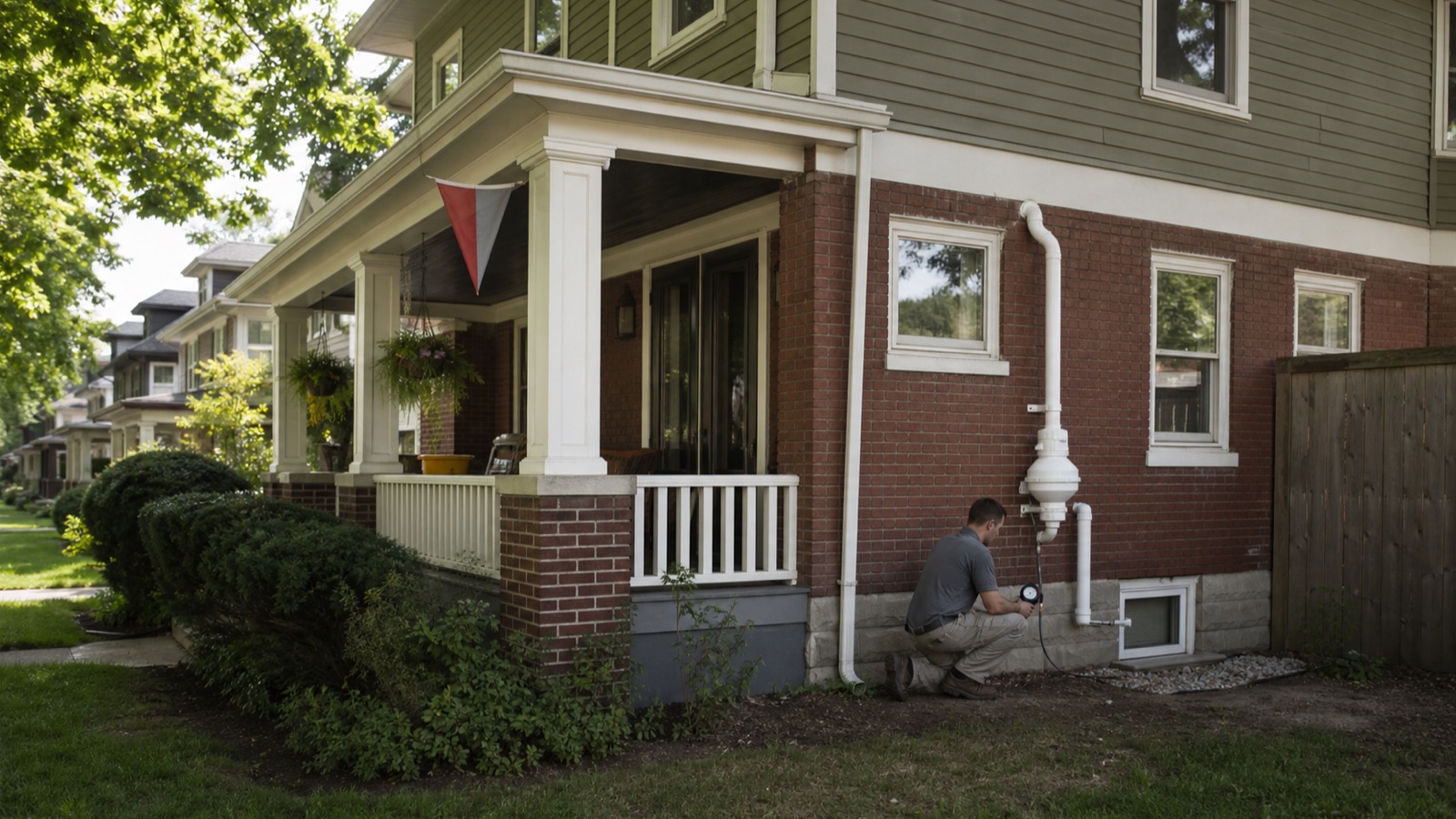
Most basement and slab installs finish in a single day. Entry points are sealed and the active sub-slab system is built to the Ohio Radon Mitigation Standards.
Step 4
A post-mitigation test of at least 48 hours, started between 24 hours and 30 days after the fan runs, as Ohio requires. The written result goes into your closeout package.
Estimated mean of 16,142 pre-mitigation radon tests in Franklin County, 2008-2017. The EPA action level is 4.0.
US lung cancer deaths linked to radon each year, about 2,900 of them among people who never smoked.
Franklin, Delaware, Licking, Fairfield, Union, Madison, and Pickaway counties are all EPA Radon Zone 1.
EPA recommends fixing a home at 4 pCi/L or more and considering a fix between 2 and 4 pCi/L.
ODH licenses radon testers, mitigation specialists, mitigation contractors, labs, and training providers in Ohio.
Ohio sets installation, labeling, testing, and paperwork rules for every radon mitigation system.
The Ohio Shale, the largest uranium source in Ohio, runs in a north-south outcrop band across Franklin County.
Every job comes with a written quote and no-pressure consultation. Workmanship warranty terms are set by your lead technician and confirmed before work begins.
Fan-driven sub-slab and sub-membrane systems built to the Ohio Radon Mitigation Standards for basements, slabs, and crawls.
Short-term and long-term radon testing by Ohio-licensed testers, run to the Ohio Radon Measurement Protocol.
Sealed-membrane sub-membrane depressurization for crawl spaces and mixed crawl-and-basement homes.
Ohio-protocol sale testing and mitigation scheduled around inspection deadlines and closing dates.
Schools, daycares, multifamily, and commercial properties. Multi-zone designs.
Fan replacement, gauge and alarm repair, resealing, and retesting for existing radon systems.
We offer $50 off any radon service for veterans, active military, first responders, and seniors 65 and older. Mention it when you call or text us.
Mention this offer when you call
(380) 221-7233“Our first test came back at 7.6 pCi/L. The mitigator routed the stack up the garage side of the house and the 48-hour retest read 0.9. Quote and final invoice matched to the dollar, and the closeout packet had everything our agent asked for later.”
“Inspection during our sale showed 8.3 pCi/L with nine days to close. Assessment Wednesday, install Friday, verification monitor pulled Monday at 1.5. The lender took the report as submitted and we closed on schedule.”
“Basement read 5.4 pCi/L before the work and 0.8 on the retest. The technician explained where the suction point was going and why, left the space cleaner than he found it, and the 12-month recheck was on the calendar before the crew left.”
These reflect real situations from homeowners across our network. Names and some identifying details are adjusted to protect homeowner privacy while keeping the point of each story intact.
The average American home holds about 1.3 pCi/L of radon, according to the EPA. Central Ohio starts from a different place. Under Columbus and its suburbs lies the Devonian Ohio Shale, which the USGS calls the largest uranium source in Ohio, in a north-south band that crosses Franklin County, with soils weathered from the Columbus and Delaware limestones around it. Glaciers spread both across the till plains, and the EPA maps every county in the region as Radon Zone 1.
The testing record agrees. In a 1988-89 state survey, 64 percent of the Franklin County homes screened were above 4 pCi/L. Two decades later, an American Lung Association analysis of CDC data found 16,142 pre-mitigation tests in Franklin County from 2008 to 2017 with an estimated mean of 9.5 pCi/L, the most tests of any county in Ohio.
None of that predicts one house. Two neighbors can read far apart because of a patched slab, an open sump, or a crawl under an addition. Our county and ZIP guide shows the data and what it can and cannot tell you.
Ohio is one of the states that regulates radon testing and mitigation directly. The Ohio Department of Health, headquartered on North High Street in Columbus, licenses radon testers, mitigation specialists who design and supervise installs, mitigation contractors, labs, and training providers. Its Hire a Professional page links a licensure map for finding licensed testers and contractors.
The state also writes the playbook. The Ohio Radon Measurement Protocol covers where a device sits, how long a house stays closed first, and what every report must list. The Ohio Radon Mitigation Standards cover where the fan may go, where the pipe must end, how sump pits are covered, what gets labeled, and what the signed proposal has to include, down to the yearly operating cost and a guarantee statement. Licensees report every job's before and after results to ODH each quarter.
All mitigation contractors you work with here hold the Ohio license and build to those standards. Our licensing FAQ explains how to check any license yourself.
Ohio's residential property disclosure form asks sellers whether they know of previous or current radon gas on the property, the level if known, and any mitigation. It does not require a test, and it tells buyers to do their own due diligence, so most Central Ohio buyers test during the inspection period.
A sale test follows tighter rules than a homeowner kit: at least 48 hours, either two devices side by side or a continuous monitor, an Ohio-licensed tester, a noninterference agreement signed by whoever controls the house, and a notice posted at each entry. Under Ohio's strategy for sales, a result of 4.0 or higher means fix the home.
Who pays is a negotiation, not a rule. The fastest path to a real number is a written proposal before the response deadline, and the cleanest finish is a system installed before closing with a post-mitigation test run between 24 hours and 30 days after the fan starts. See our real estate radon service.
The EPA attributes about 21,000 US lung cancer deaths a year to radon, about 2,900 of them among people who never smoked. Its lifetime risk table makes the stakes concrete. If 1,000 people who never smoked lived their whole lives at 4 pCi/L, about 7 could get lung cancer from it; at 8 pCi/L, about 15. For 1,000 smokers, the same levels mean about 62 and about 120, because the two exposures compound.
Those are lifetime figures, which is the useful way to read them. Radon causes no symptoms and no sudden harm, so a high result is a reason to fix the house this season, not to leave it tonight. Risk builds with the level and the years, and it falls from the day the level falls.
The people with the most to gain are smokers and anyone who sleeps, works, or plays on the lowest level, where readings are usually highest. The EPA recommends fixing at 4 pCi/L or above and considering a fix between 2 and 4. See radon and lung cancer for more.
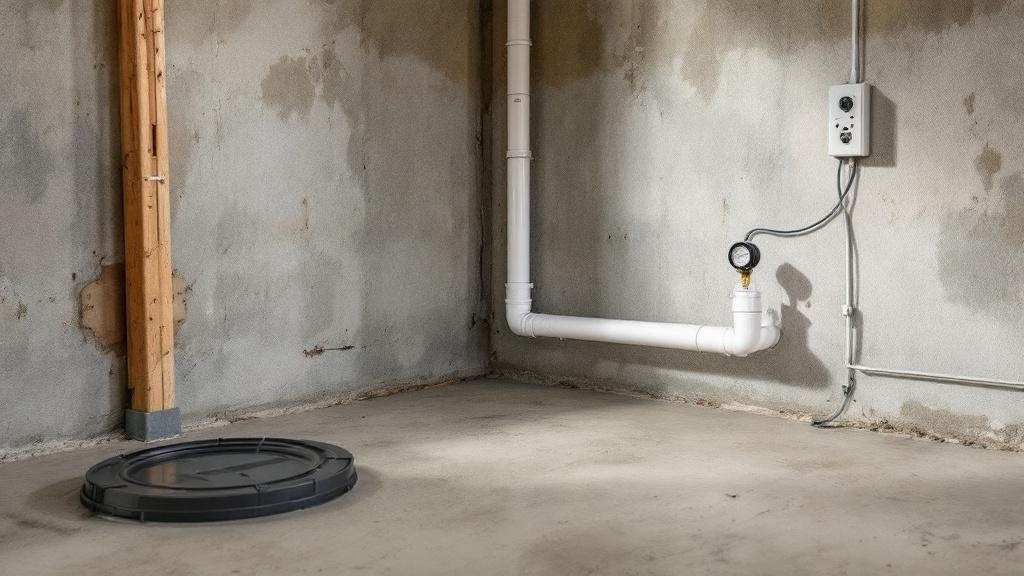
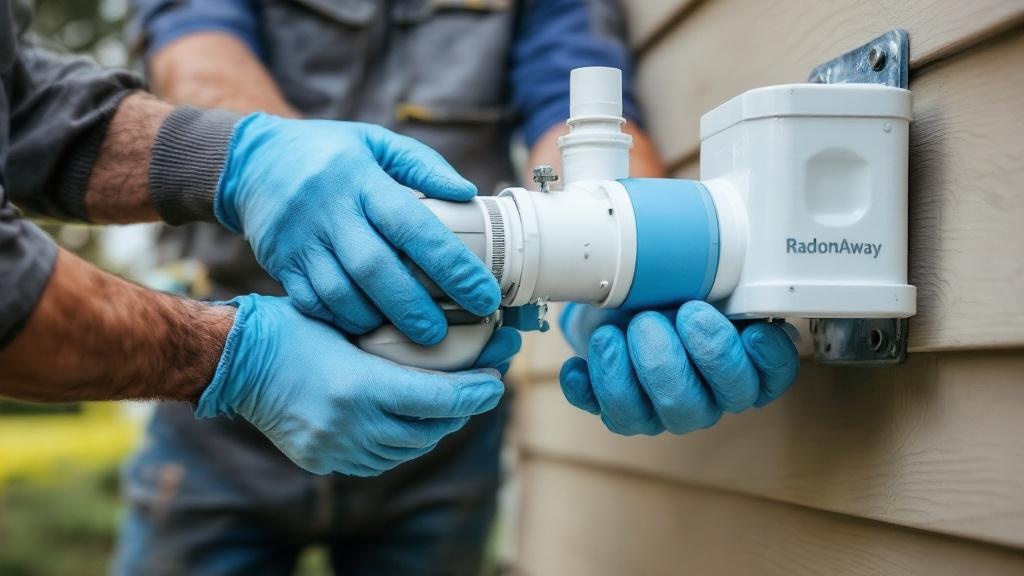
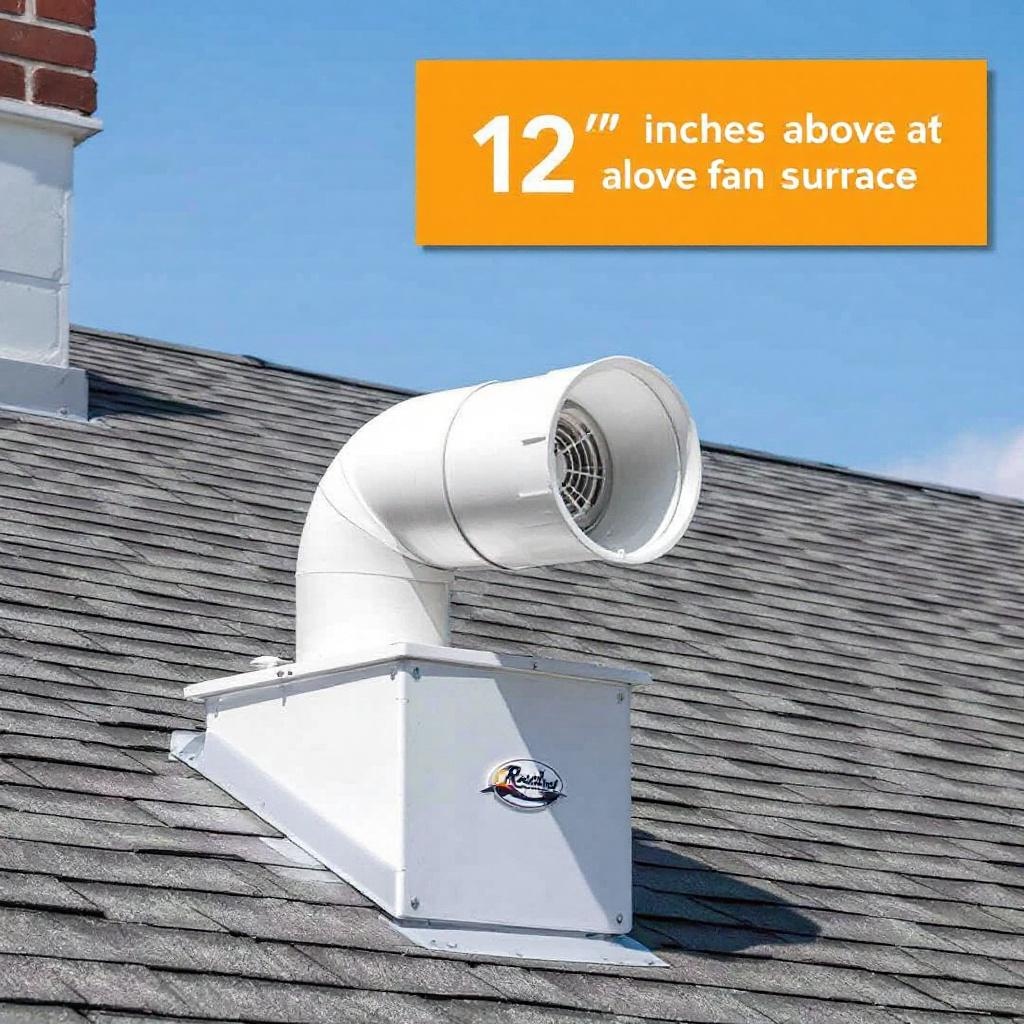
A finished system is quiet and mostly out of sight: a pipe with a gauge or monitor in the basement, a fan in the attic or on an outside wall, and labels reading RADON REDUCTION SYSTEM on the pipe and the breaker. Glance at the gauge now and then. Ohio requires a manometer to be marked with its start-up reading, so drift is easy to spot, and liquid sitting level on both sides means the fan has stopped.
The EPA notes that fans often last five years or more, so plan on replacing one during your time in the house. Swapping a worn fan for a like one is ordinary maintenance under Ohio's standards; bigger changes to the system have to bring it up to the current standard. Never switch the fan off, and reseal the sump cover with silicone after any pump service.
Retest at least every two years, as ODH recommends, and after a basement finish, waterproofing, a new sump, or HVAC work. If the gauge or a retest says something changed, our repair service covers fans, alarms, and seals.
Greater Columbus and Central Ohio and surrounding communities. Same-day estimates within 27+ neighborhoods.
Most Columbus and Central Ohio homeowners get a written fixed-price radon mitigation or testing quote within the same business day. Installs by Ohio-licensed mitigation contractors (ORC 3723.02), built to the Ohio Radon Mitigation Standards.
Browse all 49 questions for more depth.
Most Central Ohio basement and slab homes land between $1,200 and $2,400 for an active sub-slab system. Crawl spaces that need a sealed membrane run $1,800 to $3,500. A professional short-term test is $150 to $300.
The spread inside those ranges comes from the house, not the ZIP code. A 1990s Dublin or Pickerington slab with a clear path to the attic sits near the bottom. A Clintonville or Bexley basement with a patched floor, a sump, and walls that need extra sealing sits near the top, and a house that needs a second suction point can reach it. Ohio's mitigation standards also require items that belong in every price: a monitor or marked gauge, labels, an exterior fan hard-wired with its own outdoor disconnect, and a sealed sump cover that can still be lifted for pump service. Every Ohio proposal has to show the installation price and an estimate of what the system costs to run each year, so two quotes can be compared line for line. Our pricing guide by foundation type breaks the tiers down, and the calculator gives a starting range.
A single-suction-point system in a basement or slab home is usually a one-day install. Crawl spaces that need a membrane, and houses with two foundation types, can take longer. The follow-up test then runs at least 48 hours.
The install day is only the middle of the sequence. Before it, Ohio's mitigation standards call for a visual inspection, a floor plan sketch, and a communication test wherever the material under the slab is unknown, so the suction point is chosen from data rather than habit. After it, the post-mitigation test has to begin no sooner than 24 hours and no later than 30 days after the fan is switched on, run by the specialist who installed the system or by an independent Ohio-licensed tester. Weather can nudge the calendar too: Ohio's testing rules bar short tests during severe storms or sustained winds of 30 mph or more, which can push a retest by a day or two in a blustery March. If a closing date is driving the schedule, say so on the first call and the plan gets built backward from it.
Yes. Every Central Ohio county sits in EPA Radon Zone 1, and Franklin County's 16,142 pre-mitigation tests from 2008 to 2017 had an estimated mean of 9.5 pCi/L, more than twice the EPA action level of 4.0.
The county figure comes from an American Lung Association analysis of CDC tracking data, and it agrees with much older state work: the 1988-89 EPA and Ohio residential survey found 64 percent of 170 Franklin County homes above 4 pCi/L on short screening tests. The cause is geology. The Ohio Shale, the largest uranium source in the state, runs in a north-south band under Franklin and Delaware counties, and glaciers smeared shale and limestone debris across the region. The health stakes come from the EPA: about 21,000 US lung cancer deaths a year are tied to radon, roughly 2,900 of them among people who never smoked. None of that predicts a single house. Averages describe the region, and only a test tells you what your own basement is doing. See why Ohio radon runs high.
Radon travels in the soil gas under your foundation. A heated house sits at slightly lower pressure than the ground, so it draws that gas in through the floor-wall joint, cracks, sumps, drains, pipe openings, crawl-space dirt, and joints in block or stone walls.
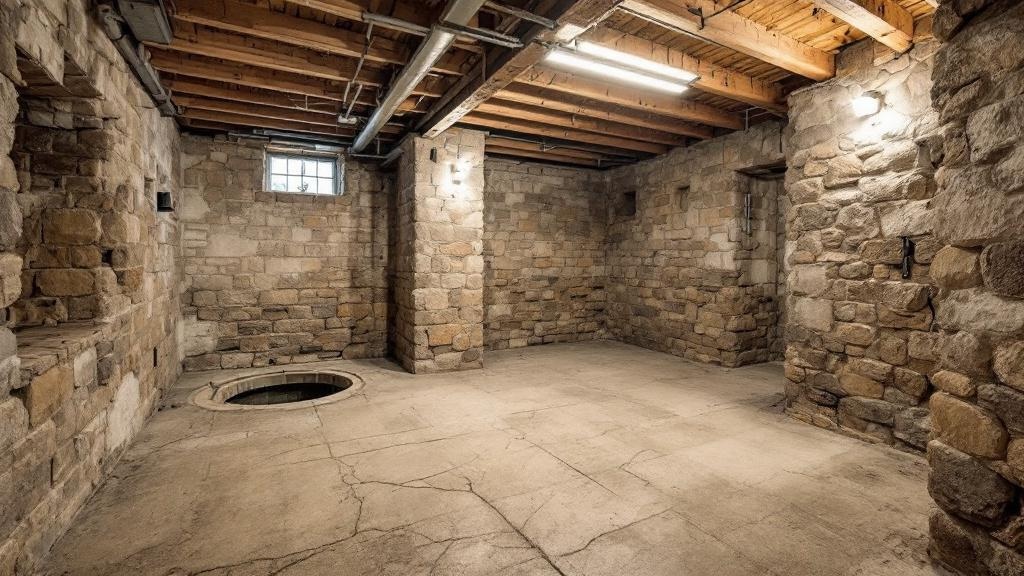
Central Ohio adds two local twists. First, most of the region is covered in glacial deposits, and the USGS found that the permeability of those deposits is the strongest control on how much radon reaches the surface: dense clay till slows it, while sand and gravel outwash along valleys like the Scioto and Olentangy lets it move freely. Second, the housing stock offers plenty of doors. A 1920s Clintonville basement may have mortared stone walls and a floor poured in sections, a postwar Whitehall ranch may sit over an open crawl, and a newer Hilliard split-level often has a slab and a crawl under one roof. Ohio's mitigation standards require the floor-wall joint, cracks, and utility openings to be sealed during an install, but sealing supports the fan; it never replaces it. See how a sump pit fits in.
The Ohio Department of Health recommends retesting a single-family home every two years and after any significant renovation. Test sooner if you start using a lower level, replace the radon fan, or change the sump, waterproofing, or HVAC.
ODH sets a longer clock for bigger buildings: multifamily, school, and commercial buildings should be retested every five years or after significant renovation. In a house with a mitigation system, the first test after the install belongs inside Ohio's window of 24 hours to 30 days after the fan starts, and the installer is required to advise you in writing to retest at least every two years after that. Between tests, the gauge on the pipe is the everyday check. A two-year rhythm fits the climate zone 5A heating season well: pick a month between November and March, close the house the way the testing protocol asks, and keep each result with the install paperwork so you can compare year over year. The retest schedule lays out the full timeline.
A short-term test, 48 hours to 90 days under Ohio's protocol, is the tool for a home sale and a first screening. A long-term test of more than 90 days shows the year-round average and is the better basis for a borderline decision.
Ohio's recommended strategy for a home that is not being sold starts with a short-term test in the lowest livable level, then adds a second short-term test or a long-term test when the first result lands between 4 and 8 pCi/L. For a sale, only the short route is practical, and Ohio requires at least 48 hours using either two side-by-side devices or a continuous monitor. Long-term devices, such as alpha-track detectors, suit a homeowner who wants the whole seasonal swing of a zone 5A year, and they need far less babysitting than a closed-house short test. Neither type is more official than the other; they answer different questions. The comparison page lays them side by side.
Two separate things: a written workmanship warranty on the install, and the fan maker's warranty. Ohio also requires every proposal to state either a guarantee to bring the average below 4 pCi/L, with its conditions, or why no guarantee is offered.
The guarantee statement is the piece most homeowners never see spelled out elsewhere, and it comes from the Ohio Radon Mitigation Standards in the appendix to OAC 3701-69-08. Read its conditions; most are reasonable, such as keeping the fan running and the sump cover sealed. On the fan, the EPA notes that fans often last five years or more and that manufacturer warranties tend not to exceed five years, so expect at least one fan replacement over the life of the house. Ask whether the workmanship warranty transfers to a buyer if a sale is possible. Keep the closeout package, which Ohio requires to include the contract and warranties, the floor plan drawing, and the pre- and post-mitigation results. If the post-mitigation test misses the guaranteed level, the correction belongs under that guarantee. See what an Ohio proposal must include.
A little. The fan runs around the clock on electricity, and the system can draw a small amount of heated or cooled air. Ohio requires every mitigation proposal to include an estimate of the annual operating cost, so you see the number before signing.
The EPA's guidance is plain: fan-powered systems are the most effective option and slightly increase the electric bill, by an amount that depends on the climate, the system, and the house. In a zone 5A Central Ohio winter the bigger variable is heat loss, and the sealing done during the install (floor-wall joint, cracks, the sump cover) limits how much warm basement air the fan can pull down through the slab. You can check the fan's draw yourself from the rating on its housing and your AEP Ohio rate. Never switch the fan off to save money; the EPA is explicit that it must run continuously for the system to work. If the operating estimate on a proposal looks high or oddly low, ask how it was calculated and which fan it assumes.
Radon mitigation across Greater Columbus and Central Ohio since 2019, with every install performed by an NRPP-credentialed local mitigator. Mon-Sat 8am-7pm.